KR1ATC North Carolina Amateur Radio crest
ON THE AIR — CLAYTON, NC

KR1ATC

Retired air traffic controller and proud U.S. Air Force Veteran. I'm a licensed general class operator and you'll find me on HF, FT-8, VHF, and making contacts all over the world. This is why you should get licensed too.

FT8  ·  14.074 MHz 00:00:00Z
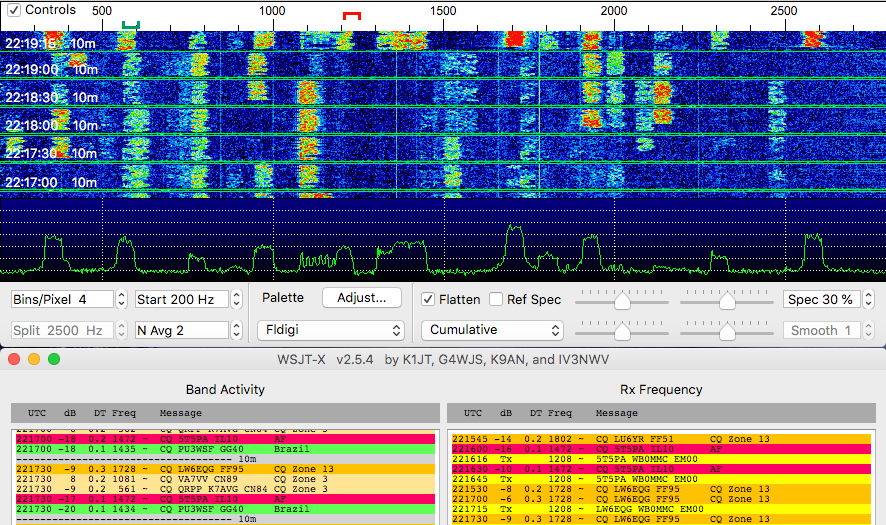
Real WSJT-X FT8 waterfall, wide graph, and band activity windows during an active session
WSJT-X — Wide Graph and Band Activity windows, FT8 mode
Rig Yaesu FT-991A
Antenna EFHW-7510 End-Fed Half-Wave
Grid Johnston County, NC
Mode of the moment FT8 & 20m SSB
REAL HAM RADIO AUDIO 80m SSB QSO, off-air recording
Recorded off-air by DX_Canada, London, Ontario · courtesy Internet Archive Community Audio
01 · THE SHACK

What's on the desk

Transceiver
Yaesu FT-991A
HF/50/144/430 MHz, all-mode. The rig that does everything from an evening net on 2 meters to chasing DX on 20 meters.
Tuner
LDG AT-1000ProII
Automatic antenna tuner, quietly matching things up so the EFHW behaves across bands without a fuss.
Amplifier
Ameritron AL-811
For the days the band is tight, and 100 watts isn't quite cutting through the noise.
Antenna
MyAntennas EFHW-7510
End-fed half-wave, hoisted up into a tree for now. One wire, no radials to bury, and it gets out surprisingly well for something this simple. A guyed lattice tower with a hex beam on top is next on the list.
Digital
WSJT-X + GridTracker
FT8 running in the background most evenings, turning a wire in the yard into contacts logged from five continents.
02 · THE PITCH

Why this hobby is worth your time

No infrastructure required

No towers, no cell carrier, no internet. A wire, a radio, and the ionosphere will get your voice to another continent.

It's genuinely useful

When the power's out and the cell network is jammed with everyone else's traffic, hams are still talking. Served agencies count on that.

A hobby with layers

Antenna theory, RF electronics, propagation, digital modes, contesting, DXing, building your own gear — pick the layer that hooks you and go deep.

Cheap to start

A Technician license and a $30 handheld gets you on the air the same week. The tower and amplifier can wait.

A built-in community

Local repeater nets, HF ragchews, and strangers who'll spend twenty minutes helping you troubleshoot a feedline over the air.

It rewards patience

Some nights the bands are dead. Then one evening they open up to Europe and every hour of tinkering pays off at once.

03 · THE PATH

How to actually get licensed

01

Technician Class

One study session with a practice-question app, one 35-question exam, no Morse code required. This gets you on VHF/UHF repeaters and some HF privileges immediately.

On air the same week you pass
02

General Class

Opens up the HF bands — 80 through 10 meters — where the real DX and ragchewing happens. This is the license that turns a handheld into a worldwide station.

Where FT8, SSB DX, and CW all live
03

Amateur Extra

The full toolbox — every band, every sub-band, every mode. Not required to enjoy the hobby, but worth it once you know you're staying.

For when you're building your own amp and arguing about antenna theory
04 · SAY HELLO

Find me on the air

147.2700AK4H repeater — Johnston Amateur Radio Society

Listen for KR1ATC checking in on AK4H, the JARS repeater — I'm a member of the club that keeps it on the air. Or find me lower down the dial calling CQ on 20m SSB and FT8 most evenings.

New to the hobby, or thinking about it? Get on the air, key up, and ask a question — that's still how most of us learned.